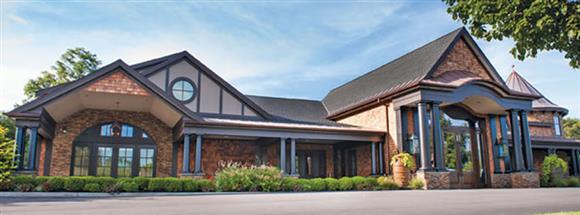






Long Island Mansion Locations, mansion wedding, gold coast mansions on Long Island, NY
One of the most special events in your life is your wedding and selecting a venue where your wedding ceremony can take place is a very important part of the planning process. If you are looking for the perfect wedding place, then Long Island has a lot to offer. There are many facilities that can accommodate all your needs and where you can make your wedding reception and ceremony a romantic and memorable one.
The mansions on Long Island are some of the most popular venues and can provide you with a unique location for the most important day of your life. Long Island is a home to mansions, historic buildings and castles, each of them offering a great experience that you might have never been through. The mansions on Long Island reflect history and are beautifully constructed to provide elegance and sophistication.
Taking you to a previous era, those estates have been converted for public use, many offering tours and others open to allow visitors to stroll the grounds and magnificent gardens to get a feel for what life was like for the privileged few. America's first captains of industry built the equivalent of European castles and chateaus and more than 500 mansions graced Long Island in the early decades of the 20th century. If their walls could talk, they would tell tales of European royalty, newly acquired American wealth and internationally renowned celebrities. Some of the most popular mansions are the
Bourne Mansion,
Coindre Hall,
the Vanderbilt Mansion and
Glen Cove Mansion.
It's easy to rent a mansion on Long Island and organize your own wedding celebration there. You can have your own mansion for a day, creating an unforgettable event for everyone. All you need to do is search for the right one that would completely satisfy your requirements.

 | Sands Point Preserve Located in Sands Point 516-571-7901 Built in 1912, Hempstead House at the Sands Point Preserve is one of the few remaining Gold Coast era mansions available for private events. Located on the 216 acre former Guggenheim Estate overlooking the Long Island Sound, this breathtaking mansio... Read More » |
 | The Mansion at Timber Point Located in Great River 631-581-0022 Set on a 300-acre estate and overlooking Fire Island, Timber Point Country Club is conveniently located between the Great River and the Great South Bay. The facility underwent a complete renovation in 2004 with the sponsorship of the Suffolk County ... Read More » |
 | Westbury Manor Located in Westbury 516-333-7117 Set on six acres of well-manicured landscape, The Westbury Manor offers an elegant setting for an outdoor cocktail party, an elaborate wedding celebration or a corporate event. Its grandeur is enhanced by beautiful ponds, cascading waterfalls and ch... Read More » |
|
|
| Long Island Mansions Sponsored Listings |
 | Set on six acres of well-manicured landscape, The Westbury Manor offers an elegant setting for an outdoor cocktail party, an elaborate wedding celebration or a corporate event. Its grandeur is enhanced by beautiful ponds, cascading waterfalls and ch... |
|  | Set on a 300-acre estate and overlooking Fire Island, Timber Point Country Club is conveniently located between the Great River and the Great South Bay. The facility underwent a complete renovation in 2004 with the sponsorship of the Suffolk County ... |
|  | Built in 1912, Hempstead House at the Sands Point Preserve is one of the few remaining Gold Coast era mansions available for private events. Located on the 216 acre former Guggenheim Estate overlooking the Long Island Sound, this breathtaking mansio... |
|
|
Other Long Island Mansions | (To our knowledge None of the mansions below offer their facility for events) |
Caumsett - Caumsett, formerly known as the Marshall Field III Estate was originally built around 1922. The land was used as a working dairy farm and a self-sufficient community where guests and
residents were also able to enjoy a game of indoor or outdoor tennis, game hunting, or polo. The Georgian style mansion was designed by John Russell Pope. Now Caumsett is a State Park, and provides
beautiful paved drives for bicyclers. The estate also boasted polo fields, stocked game hunting, indoor and outdoor tennis courts, and a dock for Field's yacht.
Delamater-Bevin Mansion - The Delamater-Bevin Mansion, also known as The Bevin House, is located on the north short of Long Island. The Victorian styled mansion boasts 22 rooms and was housed exiled
French writer and aviator Antoine de Saint-Exupéry, who wrote the well known children's book "The Little Prince" in 1942.
Greentree - Greentree is a 400-acre private estate located in Manhasset, New York on the north shore of Long Island and features a real tennis court, though it is no longer in use.
Payne Whitney purchased the estate for his wife, Helen Julia Hay, in 1904.
Harbor Hill - Harbor Hill was located in Roslyn, New York on Long Island with spectacular views of the Long Island Sound and the Roslyn Harbor. The home, which sat on a 688 acre lot, was built in 1899, and was furnished extraordinarily.
The outside was just as impressive as the insides with formal terraces and gardens finished by Guy Lowell. Harbor Hill was dynamited in 1947.
Harry E. Donnell House - The Harry E. Donnell House, also known as The Hill, is a 33-room Tudor mansion located on the north shore of Long Island, in Eatons Neck, New York.
Designed by prominent New York City architect Harry E. Donnell and built in 1902, the mansion sits on 200 acres of land and had access to two different waterfronts - Duck Island Harbor to the east, and Northport Bay to the south.
The mansion's lot also boasts an 80 acre golf course. In 2002, the current owners of The Hill - the Carr family -began operating the mansion as a bed and breakfast.
Hempstead House - Built in 1901, the Hempstead House, otherwise known as the Castle Gould or Daniel Guggenheim Estate, was designed by Hunt and Hunt as an English castle and is located in Sands Point
Preserve in Long Island. Hempstead House has 3 floors and contains 40 rooms. Perhaps most daunting, however, is the 80-foot tower at its entrance. The castle was set on 300 acres of land, and
needed 17 servants and 200 farmers and groundskeepers to keep it up. In its time, Hempstead House was known as one of the most lavish Gold Coast mansions.
Indian Neck Hall - Indian Neck Hall was designed in a Georgian style by prominent architect Ernest Flagg, and was built in 1897 for Frederick Gilbert Bourne, president of the Singer Sewing Machine
Company. At the time, Indian Neck Hall was known to be the largest estate on Long Island's Gold Coast. In 1926, the property was sold and became La Salle Military Academy which operated there until 2001. Currently it houses St. John's University.
Laurelton Hall - Completed in 1905, Laurelton Hall was located in Laurel Hollow in Long Island for artist Louis Comfort Tiffany. The mansion had 65 rooms and sat on a 600 acre lot. After Tiffany's death, the once beautiful mansion was sold and later burned down in 1957.
The Clayton Estate - The Clayton Estate located in Roslyn Harbor in Long Island was mostly known for its unique landscape design, which featured a teak trellis in the formal gardens. Now it is home to the Nassau County Museum of Art, one of the most popular suburban art museums in the country.
Coindre Hall George Brown Estate - Built in 1920, the Coindre Hall George Brown Estate featured two large towers at its entrance, and was based on a French chateau design.
Now known as "Planting Fields Arboretum State Historic Park", the estate now houses the Museum of Long Island's Gold Coast, which features exhibits, photography and other artifacts from this historic
and lavish era. The mansion is also a popular site for weddings, holiday celebrations, fund-raisers, auctions & antique shows.
The Braes - Built by Herbert L. Pratt, son of Charles Pratt, and designed by James Brite, the Braes was constructed between 1912 and 1914 in Glen Cove, Long Island.
The mansion had had elements of Jacobean, Tudor, and Renaissance design and had a distinct H-shape to it, which set it apart from the other Gold Coast mansions. In 1947, the Braes began housing the Webb Institute, a specialized private college.
Eagles Nest - The Eagle's Nest, otherwise known as the William K. Vanderbilt II estate was designed by Whitney Warren, one of the architects of the original Grand Central Terminal.
The well-known mansion boasts a unique Spanish Mediterranean design that includes a prominent arched tower at the entrance, leading to the central courtyard.
Upon Vanderbilt's death, the mansion was deeded to Suffolk County and is now the Suffolk County Vanderbilt Museum and Planetarium. The museum still houses many of Vanderbilt's original possessions and private collections.
Westbrook - Westbrook, located in Great River on Long Island was built for William Bayard Cutting and was completed in 1886. Originally the estate sat on 900 acres of land.
Today it covers about 600 acres and is known as the Bayard Cutting Arboretum. This estate is public and offers tours on cooler days.
Sefton Manor - Sefton Manor, built in 1923 for Lillian Sefton Thomas Dodge in a Tudor style is now the Mill Neck Manor School for the Deaf. Every October they host an apple festival when the school is open to the public.
The Sefton Manor proudly still features its original stone gazebos in its formal gardens.
Chelsea - The Chelsea Benjamin Moore estate, built 1923 is best known for the moat which surrounds it. The cobblestones used around this mansion came from the Chelsea section of
Brooklyn, which is where the mansion name comes from. Today Chelsea, which sits on 550 acres of fields, woodlands, ponds, and estate grounds, is part of the Muttontown Preserve - Nassau County's largest nature preserve
and one of the most beautiful settings on Long Island.
Welwyn - The Welwyn Harold Pratt estate was just one of the many Pratt estates which formed the Pratt compound in Glen Cove, Long Island. Although some have been demolished,
the remaining estates are still in use in one form or another. Thanks to the fact that Harold Pratt had more than a bit of a green thumb - this site has some of the best collections of
trees and the estate grounds are open to the public as a nature preserve. Although deteriorating, the mansion now houses The Holocaust Memorial and Education Center of Nassau County.
Winfield - Winfield, located in Glen Cove was built by F.W. Woolworth and was completed in 1920. It is a privately-owned house, which was recently up for sale!
Some considered the Winfield as one of the most lavish estates on the Gold Coast. It features a football-field sized front lawn, a giant stone fountain of King Neptune, a marble staircase at
the main entrance, a glorious ballroom with a huge picture window of the rear gardens, and a garden that back in the day boasted multi-tiers and hedge-mazes.
White Eagle/Templeton - White Eagle was originally built for Alfed Dupont in 1920 and later occupied by Sir Winston Guest who changed the name to Templeton.
It now part of the New York Institute of Technology known as the deSeversky Center, and can be rented out for weddings and other large events. Its outside design features some of the most detailed
of all the Gold Coast Mansions and still maintains a healthy gardens, making it reminiscent of the older days.
Falaise - Falaise is the famous Normandy-styled Harry Guggenheim estate, built in 1923. The mansion is in the Normandy-style design. One of this mansion's claims to fame is
that Mr. Guggenheim's close friend Charles Lindbergh wrote his book while staying here. The mansion is now part of the Sands Point Preserve.
Insifada - Insifada is located in Manhasset, Long Island and was built for Nicholas and Genevieve Brady. It was completed in 1920, and was given the name "Insifada", which means
Long Island in Gaelic. It is an imposing structure that looks like a rambling Medieval English fortress. Its outside is as impressive as the inside which boasts a main hall that stretches the
entire length of the long mansion. Another interesting feature of Insifada is the 13 fairy tales depicted on the outside walls of the house. It is now home to the St. Ignatious Jesuit Retreat House, and is open to the public.
Brookwood - One of the lesser known estates on the Gold Coast, Harry K. Knapp built Brookwood Hall, located in East Islip, in 1903 with a Georgian style. Its grounds include a lake and once housed the Orphan Asylum of Brooklyn for more than 20 years. It is now home to the Islip Art Museum.
The History of Long Island Mansions - Gold Coast Mansions
Between the 1800's and 1940's, during the Second Industrial Revolution, America saw a great influx of self-made men who made fortunes in steel, transportation and other major industries. America saw vast amounts of natural resources and an explosion of big, booming cities. It was a time of opulence, wealth and luxury that was forever depicted in the great American epic, "The Great Gatsby", which described the American Dream using Long Island as its backdrop.
These high times seemed to have no end, and beginning in the 1890's, the millionaire captains of industry were swimming in their newfound wealth and chose to celebrate lavishly by building over-the-top homes in the beautiful and highly sought after area of Long Island. Wealthy families such as the infamous Vanderbilts, Astors, Whitneys, Morgans, Pratts, Igleharts, Hearsts and Guggenheims built their mansions, castles, and chateaus on a sixteen mile stretch from Great Neck to Huntington on the North Shore of what is now Nassau County (called Queens County back in the day). In other words, this was the "it" location for anyone who was anyone in New York's most envied social and business circles. Perhaps appropriately so, this stretch of ultra fine homes was later known as the "Gold Coast".
These homes were like nothing we're used to today. In fact, the Gold Coast homes of yesteryear would put today's homes of the rich and famous to shame. The greatest architects, landscapers and designers of the time were employed to ensure each wealthy family that their home was the most posh. These well-known architectures would use every type of style you could think of, including English Tudor, French Chateau, Georgian, Gothic, Mediterranean, Norman, Roman, Spanish, etc. Even more impressive, entire rooms would be built and structured in Europe, dismantled and reassembled on the Gold Coast. And the opulence didn't end there.
Besides the glorious and awe-inspiring great houses, formal gardens, gazebos, greenhouses, stables, guest houses, gate houses, swimming pools, reflecting pools, ponds, children's playhouses, pleasure palaces, golf courses, tennis courts and playing greens further adorned the magnificent mansions. Residents and guests could enjoy a multitude of sporting and leisurely activities such as horseback riding, hunting,
fishing, playing polo, boating, golfing, playing tennis, playing croquet, swimming, etc. Of course, in true mansion style - these activities were well hidden and overall privacy was maintained by the vastness of land, tall hedges and trees, fences, gates, private roads and maps that purposely leave off the location of the mansions.
More than 500 mansions were built for wealthy families on the North Shore. These mansions were built to last hundreds of years. Unfortunately, most of them only got to see about 50 years. Financial woes such as the Great Depression, increasing income taxes, and increasing requirements for maintenance stripped these super rich families of their famous wealth, which meant having to give up their grand residences. Most other of these glorious homes have given way to natural disasters, fires, vegetation, abandonment, poor caretaking, and general city expansion and development. However, proof that these grand and opulent homes once stood still exists - even though history and maps tell us that the widely used Long Island Expressway has plowed through some of the mansions' once beautiful landscaping, gardens and roadways. Despite the "wreckage", one is still able to see remnants of those hundreds of mansions that are now in the past. For example, there is a double row of trees in the center median of the Southern State Parkway near the
Belmont State Park. These trees were once the main drive to the late August Belmont residence. There are also huge stone gates in the woods which once stood in front of the great Charles Hudson estate.
Luckily, though, you don't have to search too hard to see clues of what used to be. Nearly 200 Gold Coast mansions still exist, many of which are available for you to tour, or better yet, cater an event at. Well maintained mansions of the Industrial Age still exist as private residences, public buildings, museums, catering halls, sports fields, state and county parks, places of worship and
universities/colleges. For example, thanks to the vision and care of its children, the Phipps Mansion - located in Old Westbury - is still intact and as beautiful as ever. Indeed, its gardens, the
Old Westbury Gardens, is world renowned and hosts several major events throughout the year, not to mention numerous tours. Otto Kahn's famous Oheka Castle, which was once the second largest private residence in the United States, is also still very well maintained. It hosts corporate events, serves as a luxury hotel, and is also available for tours.
The Gold Coast homes have also brought the likes of Hollywood over to Long Island on a number of occasions. Major motion pictures have used various Gold Coast homes as daunting backdrops. For example, the Old Westbury Gardens were featured by Alfred Hitchcock's North by Northwest, Love Story, Age of Innocence starring Wynona Ryder, Wolf starring Jack Nicholson, and Cruel Intentions starring Reese Witherspoon. The
Oheka Castle was used in Citizen Kane and the recent What Happens in Vegas starring Cameron Diaz and Ashton Kutcher. The Planting Fields Estate was used in Love Story and Sabrina.
The Hempstead House in Sands Point appeared in New Jack City. The film Reversal of Fortune featured the Old Westbury mansion, Knole. The Caumsett Estate appeared in Arthur;
Vanderbilt's Eagle's Nest in Crocodile Dundee II, Mill Neck Manor in Trading Places, and The Braes in Glen Cove in Batman Forever. And, no one can forget the famous "horse head in the bed" scene in The Godfather, which took place in the
Sands Point mansion of Falaise.
The historical, beautiful and grand estates of the Gold Coast serve as a proud reminder of where Long Island comes from. It wasn't too long ago when America's most notoriously wealthy families used the North Shore as fox hunting grounds and as a retreat from their hurried, money-making days in New York City. It was a time when elaborate parties and social gatherings took place daily and when opulent and lavish lifestyles were a thing of the norm. It was a time when posh celebration met comfort and leisure.
Why not take a page out of our history's books by offering your guests a piece of the past by booking your next event at one of Long Island's famous mansions? Give them an experience they'll never be likely to forget.